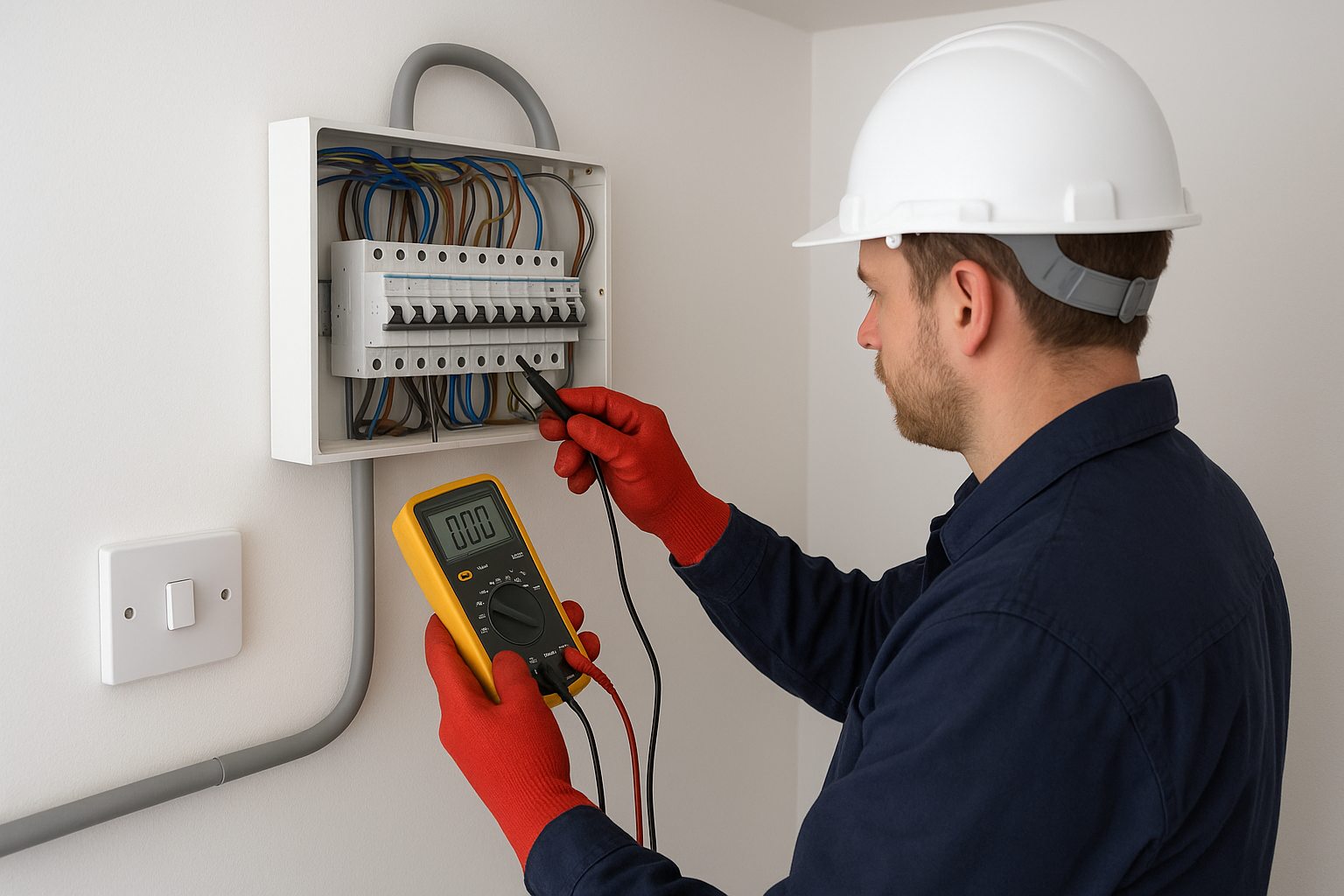
When electrics start tripping, flickering or failing without warning, the priority is to find the cause safely and quickly. Fuse Fixers provides electrical fault finding in Belmont for homes, landlords, tenants and local businesses that need a proper diagnosis rather than guesswork. That can mean tracing intermittent faults, isolating a problem circuit, checking for earth faults, testing insulation resistance, or locating hidden cable and junction box issues that only show up under load or when damp conditions change.
Fault-finding work is often needed in Belmont properties where wiring has been altered over time, where older circuits are still in use, or where a newer appliance has exposed a weakness elsewhere on the installation. We regularly see problems in Victorian terraces, converted flats, older rewires, modern flats, and shops or offices with mixed-age electrical equipment. In practical terms, the issue may present as nuisance tripping, lights that cut out and return, sockets that work one day and fail the next, a burning smell near a fitting, or a circuit that only trips when several appliances are used together.
Fuse Fixers works from a service area at 45 Eaton Pl, London SW1X 8DE, United Kingdom, and supports Belmont and nearby locations including Sutton, Cheam, Banstead, Carshalton and Ewell. We also cover local reference points such as Belmont Station, Sutton Hospital, Belmont Village, Banstead Downs and Overton Park. If you need electrical fault finding Belmont, call 020 3633 4137 or email info@belmont-electricians.co.uk to request a visit.
Electrical faults are not something to ignore or keep resetting. If a circuit is tripping repeatedly, if you can smell heat or burning, if there is visible damage, or if damp has reached sockets, switches or light fittings, switch off at the consumer unit where it is safe to do so and keep clear of the affected equipment. Do not remove covers or touch exposed conductors. A qualified electrician should test the circuit properly, identify the fault path and advise on the safest repair option. Some electrical work is notifiable under Part P of the Building Regulations and should be certified where applicable.
Tracing Intermittent Faults in Belmont
Intermittent faults are some of the hardest electrical problems to diagnose because they do not always appear during a quick visual check. A circuit may trip only when a kettle, oven, washing machine or heater is used at the same time as other appliances. A light may work normally, then fail after a few minutes, or a socket may only become unreliable when a plug is moved or a room gets warmer or more humid. In Belmont, this can happen in older homes with ageing cable, in converted flats where circuits have been extended, and in commercial spaces where equipment is added over time.
Tracing intermittent faults Belmont usually starts with a conversation about when the issue happens, what has changed recently, and which rooms or appliances are involved. That helps narrow the likely causes before testing begins. We then inspect the affected area, check the installation layout, and look for signs of heat damage, loose terminations, worn accessories, water ingress or overloaded circuits. Where needed, we isolate sections one by one to find the point at which the fault disappears. This is a methodical process, not a guess.
Common warning signs include repeated tripping after rain, flickering lights in one room, sockets that lose power and return, and appliances that only fail on a specific circuit. In homes near Belmont Village or around older residential streets, we often find that historic alterations have created a weak connection somewhere in the circuit. In shops and offices, the problem may be linked to office equipment, display lighting, or a socket circuit carrying more load than it was designed for.
If the fault is linked to a known appliance, we may recommend it is unplugged until tested separately. If the problem appears to be in the fixed wiring, the circuit should be left isolated until the cause is identified. That protects the installation and reduces the risk of damage to equipment.
Circuit Testing and Isolation in Belmont
Circuit testing and isolation Belmont is the next step when the fault could be anywhere along the route of the wiring. This is especially important where several rooms are fed from the same circuit, or where the consumer unit contains multiple circuits serving lighting, sockets, kitchen equipment or outbuildings. In Belmont properties, we often see mixed usage patterns: a modern appliance in a room with older wiring, or a refurbished area connected to an older part of the building. That combination can make overloads and hidden defects more likely.
The aim of circuit testing is to determine whether the issue is caused by overload, insulation breakdown, a neutral fault, a loose connection, a damaged accessory, or a problem with a connected appliance. We isolate circuits carefully and test in stages so the fault can be narrowed down without unnecessary disturbance. This approach is useful for landlords managing rental properties, homeowners dealing with unexplained outages, and businesses that need to keep disruption to a minimum.
Typical signs that a circuit needs testing include:
- Intermittent tripping at the consumer unit
- One room or one group of sockets losing power
- Lights dimming when equipment starts up
- Repeated failure after a new appliance is installed
- Heat, buzzing or odour from a switch, socket or fitting
Overloading is a frequent cause of repeated problems. It can happen when extension leads, heaters, chargers, kitchen appliances and entertainment equipment are all used on the same circuit. In some cases, the wiring itself is sound but the circuit is being asked to carry more than it comfortably should. In other cases, the overload has already caused damage to a connection or accessory.
Where a circuit needs to be left isolated for safety, we explain what has been switched off, why it was isolated, and what needs to happen next. That is particularly useful for tenants and landlords who need a clear record of the issue and the next steps.
Earth Fault and Insulation Testing in Belmont
Earth fault and insulation testing Belmont is essential when the problem suggests deterioration inside the wiring rather than a simple accessory fault. Insulation can break down with age, heat, moisture or physical damage, and earth faults can show up as tripping, shock risk, or instability that only appears under certain conditions. Damp is a common trigger in basements, ground-floor rooms, kitchens, bathrooms, external walls and areas close to roof leaks or plumbing issues.
In Belmont, damp related faults may be found in older properties where cable routes pass through colder wall sections, in converted flats with shared building fabric, or in rooms affected by condensation and poor ventilation. Ageing cable can also become brittle or weakened, particularly where it has been disturbed during previous decoration or refurbishment. If a cable route has been buried, clipped poorly or joined in an inaccessible place, the fault may only reveal itself through proper testing.
During insulation and earth fault testing, the goal is to establish whether the circuit can safely retain power, whether a section needs repair, or whether more extensive work is required. This is not a visual-only check. It is a structured diagnostic process that helps distinguish between a faulty appliance, a damaged accessory, and a deeper wiring defect. For customers, that means a clearer understanding of the issue and a more reliable repair plan.
Urgent signs that need immediate attention include:
- A burning smell from a socket, switch or light fitting
- Visible scorch marks or melted plastic
- Repeated tripping with no obvious appliance cause
- Shocks, tingles or buzzing from equipment
- Water ingress near electrical accessories
If any of those signs are present, switch off the affected circuit if it is safe to do so and arrange an electrician without delay. Do not continue resetting the breaker if the same fault keeps returning.
Hidden Cable and Junction Box Faults in Belmont
Hidden cable and junction box faults Belmont often cause the most frustration because the visible part of the installation looks normal while the fault sits behind a wall, under a floor, in a loft, or above a ceiling. These problems can arise after alterations, accidental damage during drilling or decorating, rodent damage, moisture exposure, or a previous repair that was not completed properly. Junction boxes hidden in loft spaces, under floors or in service voids can loosen over time, especially where the building has movement or vibration.
In Belmont, we often see hidden faults in older rewires where later additions were made to the circuit, and in modern flats where access is limited and wiring routes are concealed. Shops and offices can also develop hidden faults where equipment has been moved, partitions have changed, or lighting circuits have been extended. When the fault is not visible, careful isolation and testing help identify the likely section before any repair work is opened up.
We always aim to minimise unnecessary disturbance. If access is needed to a loft, cupboard, service void or other concealed area, we will explain what we need to inspect and why. Where the fault is likely to involve hidden wiring, it is useful for the customer to know whether the area is accessible, whether furniture or stored items need to be moved, and whether the circuit can be left safe while work is planned.
Access notes matter because hidden faults are often linked to the layout of the property. In a converted flat, the issue may sit behind a boxed-in service route. In a Victorian terrace, it may be in a ceiling void or under a floorboard route. In a commercial unit, it may be above a suspended ceiling or behind fixed equipment. Good fault finding takes that into account before work begins.
Written Findings and Repair Options in Belmont
Written findings and repair options Belmont are helpful when you need a clear summary of what was tested, what was found, and what should happen next. This is particularly useful for landlords, managing agents, tenants reporting a defect, and business owners who need a practical record for maintenance planning. After fault finding, we can explain whether the issue appears to be a failed accessory, a damaged cable, an overloaded circuit, moisture-related deterioration, or a deeper wiring concern that needs further work.
Our recent local work includes a lighting fault repair in Ewell where an intermittent lighting issue was traced, switches and fittings were checked, and safe use of the affected rooms was restored. In Sutton, we attended an emergency power loss callout, identified the problem circuit and explained the next repair steps before leaving the installation secure. In Cheam, we reviewed kitchen electrical points after nuisance tripping and highlighted the repairs needed before further appliance use. These jobs show the kind of practical diagnostic work customers often need: find the cause, make the area safe, and set out the next action clearly.
Repair and upgrade options may include replacing a damaged accessory, repairing a loose termination, carrying out consumer unit work where a protective device or circuit arrangement needs updating, or planning a wider electrical repair if the fault is part of a larger ageing installation. We also support lighting installation, socket installation, domestic electrician and commercial electrician work where the fault diagnosis leads to a wider improvement plan.
If you are a homeowner in Belmont, a landlord with a recurring issue, or a local business dealing with repeated circuit problems, the key is to deal with the cause rather than the symptoms. Resetting a breaker may restore power for the moment, but it does not remove the fault. A proper diagnosis helps protect people, equipment and the building itself.
Fuse Fixers provides electrical fault finding, electrical repairs, emergency electrician support and related services across Belmont and nearby areas including Sutton, Cheam, Banstead, Carshalton and Ewell. For help with an urgent fault, a recurring tripping issue, damp-related wiring concern or hidden cable problem, call 020 3633 4137 today or email info@belmont-electricians.co.uk. If you need electrical fault finding Belmont, we can discuss the symptoms, access requirements and the safest next step for your property.
Service areas and local relevance: Belmont Station, Sutton Hospital, Belmont Village, Banstead Downs and Overton Park are all within the area we serve, along with surrounding homes, flats, shops and offices. Whether the issue is in a kitchen, hallway, loft, outbuilding, office back room or communal area, the objective is the same: identify the fault safely, explain the findings clearly, and put forward the most sensible repair path.